

Every parent knows how challenging it can be to help a child with ADHD stay calm and focused during busy family life. Navigating the right strategies for emotional regulation becomes even trickier when screens are not the preferred solution. Interactive toys, designed to channel energy through purposeful play, offer a screen-free way to nurture attention and self-control. Discover how these thoughtfully engineered toys can support your child’s unique needs, with options that turn everyday routines into opportunities for growth and peace.
Table of Contents
- Defining Interactive Toys For ADHD Support
- Varieties Of Interactive Toys And Their Benefits
- How Interactive Toys Enhance Focus And Calm
- Practical Ways To Integrate Toys Daily
- Mistakes To Avoid And Safety Considerations
Key Takeaways
| Point | Details |
|---|---|
| Importance of Interactive Toys | Interactive toys provide sensory stimulation to support focus and emotional regulation in children with ADHD. |
| Categories of Toys | Key categories such as Fidget Tools, Tactile Exploration, and Movement-Based Toys offer varied sensory experiences that aid in concentration and skill development. |
| Integration Strategies | Incorporating interactive toys into daily routines enhances emotional regulation and cognitive engagement, leading to better management of ADHD symptoms. |
| Safety and Supervision | Prioritising toy safety and proper supervision is critical to maximise benefits and minimize risks associated with interactive toys for children. |
Defining Interactive Toys for ADHD Support
Interactive toys represent an innovative approach to supporting children with Attention Deficit Hyperactivity Disorder (ADHD), offering unique sensory experiences designed to enhance focus and emotional regulation. These specialised tools go beyond traditional playthings, functioning as strategic support mechanisms for neurodivergent minds.
At their core, interactive toys are specifically engineered to provide targeted sensory stimulation. Sensory engagement strategies help children with ADHD manage their symptoms by channeling physical energy into controlled, purposeful movements. The design philosophy involves creating objects that simultaneously entertain and support cognitive functioning.
Key characteristics of effective interactive ADHD toys include:
- Provide repetitive, calming motion
- Offer tactile feedback
- Support unconscious movement without significant distraction
- Encourage fine motor skill development
- Help regulate emotional responses
Research indicates that these toys act as complementary behavioural support tools. Unconscious repetitive motions can significantly improve concentration and reduce anxiety, making them valuable additions to traditional ADHD management strategies.
Pro tip: Select interactive toys that match your child’s specific sensory needs and preferences, ensuring they provide stimulation without causing overwhelming sensory input.
Varieties of Interactive Toys and Their Benefits
Interactive toys for ADHD are far more sophisticated than simple playthings, offering targeted sensory experiences designed to support neurodivergent children’s cognitive and emotional development. Sensory rehabilitation toys represent a cutting-edge approach to engaging and supporting children with unique neurological needs.
The diverse world of interactive toys for ADHD includes several key categories that provide different types of sensory stimulation:
-
Fidget Tools
- Cubes with multiple tactile surfaces
- Spinners with smooth rotational mechanisms
- Textured stress balls
-
Tactile Exploration Toys
- Threading and beading activities
- Messy play materials (wet and dry)
- Chewable sensory items
-
Movement-Based Toys
- LED interactive blocks
- Rotating manipulation toys
- Balance and coordination games
Sensory integration toys offer remarkable benefits by providing controlled sensory input that helps children regulate their emotional and cognitive responses. These specialised tools are engineered to improve concentration, reduce anxiety, and support fine motor skill development through engaging, purposeful play.

Research indicates that carefully selected interactive toys can significantly enhance a child’s ability to focus and manage ADHD symptoms. By offering structured sensory experiences, these toys transform play into a therapeutic intervention that supports cognitive growth and emotional regulation.
Pro tip: Rotate different types of interactive toys regularly to maintain your child’s interest and prevent sensory adaptation.
Here’s a summary of the main interactive toy categories and their unique therapeutic impacts:
| Toy Category | Sensory Focus | Typical Benefit |
|---|---|---|
| Fidget Tools | Tactile stimulation | Boosts concentration, reduces anxiety |
| Tactile Exploration | Touch and texture variety | Supports sensory processing, fine motor development |
| Movement-Based Toys | Dynamic motion and balance | Enhances coordination, channels excess energy |
How Interactive Toys Enhance Focus and Calm
Understanding how interactive toys support children with ADHD requires examining their unique neurological impact. Classroom behavioral strategies reveal that controlled physical movement can significantly improve cognitive performance and emotional regulation.
The mechanisms behind interactive toys’ effectiveness are multifaceted, involving several key neurological processes:
-
Sensory Regulation
- Provides controlled tactile input
- Reduces sensory overload
- Helps balance nervous system responses
-
Cognitive Engagement
- Redirects excess mental energy
- Supports sustained attention
- Creates alternative focus channels
-
Emotional Management
- Decreases anxiety through predictable interactions
- Offers safe emotional expression
- Builds self-regulation skills
These toys work by creating a subtle, continuous sensory experience that helps children with ADHD channel their natural movement impulses productively. By providing a controlled, socially acceptable outlet for physical energy, interactive toys transform potential distractions into opportunities for improved concentration and emotional stability.
Structured movement can be more powerful than complete stillness for neurodivergent minds.
Careful selection and strategic implementation of interactive toys can dramatically improve a child’s ability to manage ADHD symptoms, transforming potential challenges into strengths through intelligent, supportive design.
Pro tip: Observe your child’s specific sensory preferences and select interactive toys that match their unique neurological needs.
Practical Ways to Integrate Toys Daily
Successfully integrating interactive toys into daily routines requires strategic planning and a nuanced understanding of a child’s unique sensory needs. Structured learning environments play a crucial role in transforming play into meaningful developmental opportunities.
Parents and caregivers can implement interactive toys effectively through several targeted approaches:
-
Morning Routine Integration
- Use fidget tools during breakfast preparation
- Include sensory toys during getting-dressed time
- Create predictable transition moments
-
Learning Enhancement Strategies
- Incorporate tactile toys during homework
- Use movement-based toys between study sessions
- Reward focused behaviour with interactive play
-
Emotional Regulation Techniques
- Introduce calming toys during high-stress moments
- Use predictable sensory experiences for transitions
- Develop personalised coping mechanisms
Consistent, gentle integration matters more than perfect execution.
The key is creating a flexible, supportive environment where interactive toys become natural extensions of daily life, not additional tasks. By embedding these tools seamlessly, parents can help children develop self-regulation skills while maintaining a sense of fun and spontaneity.
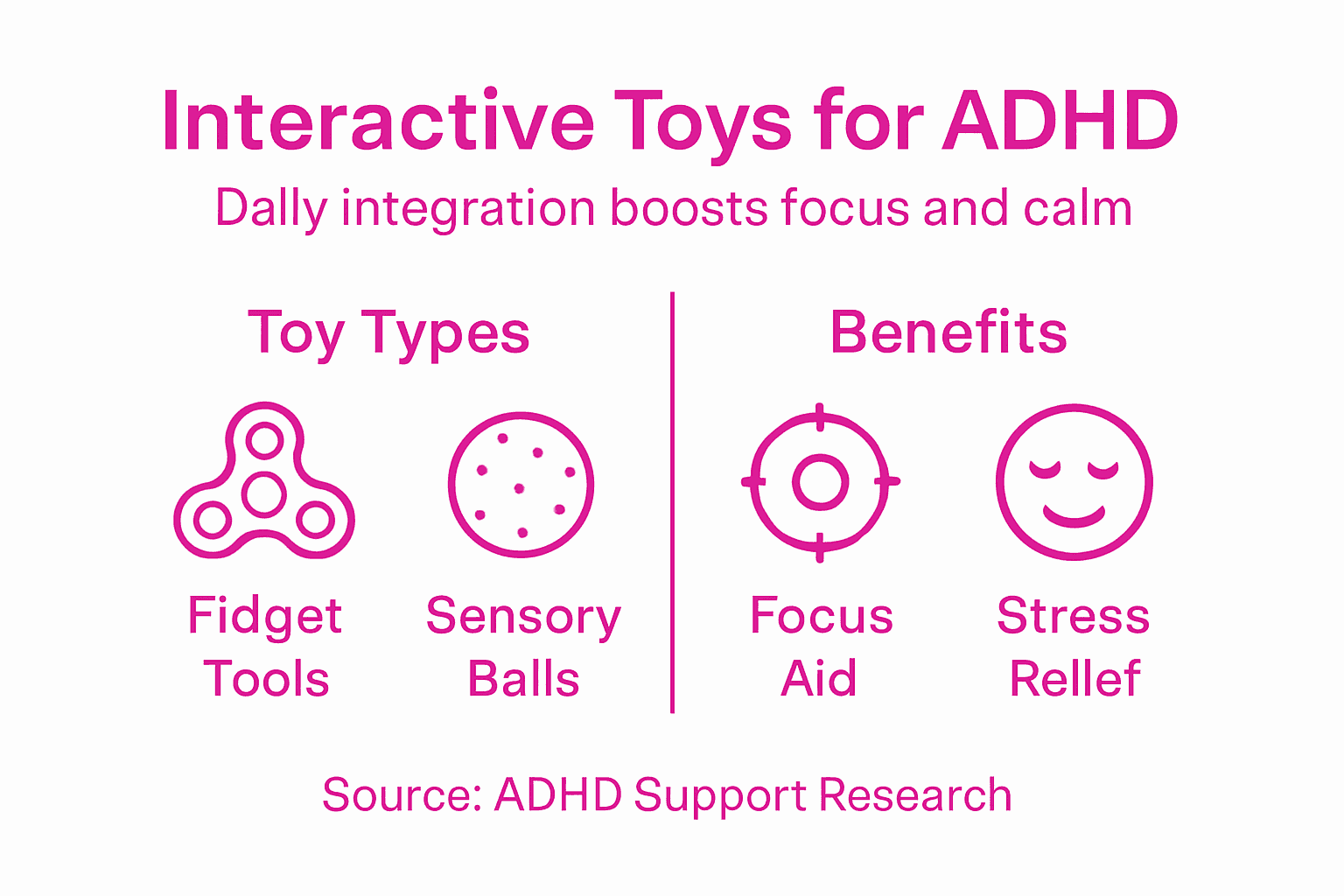
Pro tip: Rotate interactive toys weekly to maintain novelty and prevent sensory adaptation, keeping engagement levels high.
This table highlights practical strategies for daily integration of interactive toys and their likely outcomes:
| Routine Area | Integration Strategy | Expected Positive Outcome |
|---|---|---|
| Morning | Use sensory tools during transitions | Smoother start, lower stress |
| Study Time | Incorporate tactile toys for focus | Prolonged attention, fewer disruptions |
| Emotional Moments | Provide calming interactive toys | Improved self-regulation, reduced frustration |
Mistakes to Avoid and Safety Considerations
Navigating the world of interactive toys for ADHD requires careful attention to safety and developmental appropriateness. Toy safety standards are critical in ensuring children’s well-being and maximising therapeutic benefits.
Common mistakes parents and caregivers should avoid include:
-
Material and Design Risks
- Purchasing toys with small detachable parts
- Selecting items with sharp or rough edges
- Choosing toys without proper safety certification
-
Supervision and Usage Errors
- Leaving children unsupervised with new interactive toys
- Ignoring age recommendations
- Failing to inspect toys for wear and tear
-
Sensory Overstimulation Concerns
- Introducing too many sensory inputs simultaneously
- Disregarding individual sensory sensitivities
- Neglecting to monitor child’s emotional response
Safety is not about perfection, but consistent, mindful attention.
Special considerations are essential for children under three or those with complex sensory needs. Non-toxic material selection becomes paramount, ensuring interactive toys support development without introducing unnecessary risks.
Pro tip: Conduct monthly safety inspections of interactive toys, checking for loose components, signs of damage, and potential choking hazards.
Discover a Smarter Way to Support ADHD Minds with Interactive Tools
The article highlights the challenge of finding effective, sensory-supported solutions that enhance focus and emotional regulation for children with ADHD. Interactive toys offer controlled tactile engagement and calming repetitive motion, but integrating these into daily life can be difficult without the right tools. If you are looking for a companion that combines the benefits of sensory stimulation with practical everyday use, MOMORO offers an innovative approach designed specifically for ADHD, anxiety, and busy minds.
MOMORO is a 5-in-1 interactive plush companion that not only provides calming digital gifts such as focusing audio and mini games each month but also serves multiple everyday functions to reduce overwhelm. It supports sustained attention and emotional balance through tactile comfort and convenient features like a phone holder and detachable wallet to keep essentials organised. Discover how a single, thoughtfully designed companion can transform your daily routine by visiting Shop Japanese-Inspired Plush Toys for ADHD & Anxiety – MOMORO & Friends.

Elevate your ADHD support toolkit now with MOMORO’s sensory-friendly, multifunctional plush that turns distractions into calm focus. Explore the full range and learn more about how this companion can fit seamlessly into your lifestyle at https://www.momoro.store/. Start building calmer, more organised days with a tool designed to meet the unique needs of ADHD minds. Visit https://www.momoro.store/ to experience the difference today.
Frequently Asked Questions
What are interactive toys for children with ADHD?
Interactive toys for children with ADHD are specially designed tools that provide sensory stimulation to help manage symptoms such as inattention and hyperactivity. They offer focused sensory experiences that encourage engagement and emotional regulation.
How do interactive toys enhance focus and calm in children with ADHD?
Interactive toys support children with ADHD by providing controlled sensory input that helps regulate their emotional and cognitive responses. This can lead to improved concentration and reduced anxiety through structured, purposeful play.
What types of interactive toys are beneficial for ADHD?
There are several categories of interactive toys beneficial for ADHD, including fidget tools (such as cubes and spinners), tactile exploration toys (like threading materials and chewables), and movement-based toys (such as balance games and manipulation toys).
How can I effectively integrate interactive toys into my child’s daily routine?
To effectively integrate interactive toys, consider using them during morning routines, homework sessions, and high-stress moments. Encourage interaction through structured play, and ensure you rotate toys regularly to maintain engagement and prevent sensory adaptation.