

Supporting a child with ADHD often means facing daily battles with focus, emotional meltdowns and constant disorganisation. Traditional approaches rarely fit the way ADHD brains work, leaving you frustrated and your child overwhelmed. Finding tools that truly help can feel like searching for a needle in a haystack.
The encouraging news is that innovative tech-enabled toys and organisational tools are changing the game for British families. Backed by research, these interactive solutions offer playful, personalised support for attention, emotional regulation and everyday routines. You and your child can finally experience calmer mornings, smoother transitions and more independent problem-solving.
Get ready to discover clever ways technology transforms everyday struggles into small wins. The strategies ahead are practical, fun and ready to make a real difference in your daily life.
Table of Contents
- Boosts Calmer Focus With Interactive Tools
- Encourages Emotional Regulation Through Play
- Reduces Stress By Organising Essentials
- Supports Positive Daily Routines Without Pressure
- Promotes Independent Problem Solving
- Unlocks Educational Gifts For Continual Growth
Quick Summary
| Takeaway | Explanation |
|---|---|
| 1. Use interactive tools for focus | Tech-enabled toys provide structured engagement, making it easier for children with ADHD to maintain attention by turning focus into a game. |
| 2. Foster emotional regulation through play | Interactive toys help children recognise emotional states and manage feelings playfully, turning handling emotions into a rewarding experience. |
| 3. Incorporate organisation into toys | Toys with built-in organisation features simplify daily life, helping children keep track of essentials and reduce stress for the entire family. |
| 4. Create positive, pressure-free routines | Engaging with interactive companions during routines transforms typical tasks into enjoyable experiences, encouraging cooperation rather than conflict. |
| 5. Promote independent problem-solving | Through interactive challenges, children develop executive function skills and confidence in problem-solving without feeling pressured. |
1. Boosts Calmer Focus with Interactive Tools
Interactive tools transform how children with ADHD maintain focus. Rather than fighting distraction alone, your child gains a structured, engaging companion that makes staying attentive feel less like a chore.
When you introduce tech-enabled toys with interactive features, you’re essentially giving your child a calming scaffold for their attention. These tools work because they combine movement, feedback, and engagement—three things ADHD minds crave.
Here’s what makes interactive tools so effective:
- Gamified environments keep children engaged through immediate rewards and progress feedback
- Adaptive difficulty adjusts to your child’s skill level, preventing both boredom and overwhelm
- Interactive prompts provide discreet reminders without feeling like punishment
- Sensory feedback (vibrations, sounds, visuals) anchors attention to the present moment
- Structured tasks break overwhelming activities into bite-sized, manageable steps
Research shows that serious games and AI-driven interactive applications significantly improve focus by supporting behavioural and emotional regulation in children with ADHD. These aren’t passive experiences—they actively guide your child’s attention whilst building focus capacity over time.
Think of it like this: traditional focus strategies ask your child to sit still and concentrate through sheer willpower. Interactive tools do the opposite. They meet your child where they are, offering engaging experiences that make staying focused feel natural rather than exhausting.
Interactive tools don’t fight ADHD brains—they work with them by providing structure, feedback, and engagement simultaneously.
Tech-enabled companions like plush toys designed for ADHD support unlock free monthly calming gifts, mini games, and focus audio that reinforce these benefits consistently. Your child develops a routine around using these tools, which itself becomes a powerful focus habit.
The beauty is subtlety. Your child doesn’t feel like they’re undergoing treatment—they’re simply playing with something they love whilst building genuine focus skills.
Pro tip: Introduce interactive tools during low-pressure moments first (like playtime or quiet time) so your child develops positive associations before using them during actual homework or focus tasks.
2. Encourages Emotional Regulation Through Play
Emotional dysregulation is one of the toughest parts of parenting a child with ADHD. Your child’s feelings hit hard and fast, leaving everyone exhausted. Tech-enabled toys change this by turning emotional regulation into something playful rather than punishing.
When your child plays with interactive toys designed for emotional support, they’re simultaneously building emotional awareness and control skills. The play itself becomes the practice ground for managing big feelings.
Here’s why play works so well for emotional regulation:
- Interactive feedback helps children recognise emotional states before they spiral
- Gamified responses make managing feelings feel rewarding rather than forced
- Real-time support provides calming strategies exactly when your child needs them
- Playful engagement keeps your child invested in learning emotional tools
- Repetitive interactions build emotional capacity through consistent practice
Digital tools and apps designed for emotional regulation provide tailored strategies that support self-monitoring and emotional coaching through interactive play. Rather than lecturing your child about feelings, these toys facilitate natural learning through engagement.
Consider what happens when your child uses an interactive toy during an emotional moment. Instead of hearing “calm down,” they receive gentle prompts, soothing audio, or tactile feedback that actually helps their nervous system settle. Your child learns the connection between their action and the calming response, building confidence in managing emotions independently.
Emotional regulation through play isn’t about avoiding big feelings—it’s about giving your child practical tools to move through them.
The beauty of this approach is that it normalises emotional management. Your child develops healthy habits without feeling singled out or broken. They’re simply playing with something enjoyable whilst building genuine resilience.
Through consistent interaction with these tools, your child develops what researchers call self-monitoring capacity. They start recognising their emotional triggers and reaching for calming strategies automatically, even outside playtime.
Pro tip: Keep the interactive toy accessible during high-emotion moments—transitions, frustration, or overstimulation—so your child naturally reaches for it as their go-to emotional support rather than an afterthought.
3. Reduces Stress by Organising Essentials
One of the biggest stressors for parents of children with ADHD is the endless searching. Where’s the permission slip? Where did they put their keys? Tech-enabled toys with built-in organisation features eliminate this chaos by keeping essentials accessible and accounted for.
When you choose a toy that doubles as an organisational companion, you’re solving two problems at once. Your child gets a beloved item whilst you gain peace of mind knowing essentials are in one place.
Here’s what makes organisation features so powerful for reducing stress:
- Integrated wallets and key holders keep small items from vanishing into the void
- Detachable compartments help children develop ownership of their belongings
- Phone holders and headphone storage reduce clutter and forgotten items
- Visual reminders remind your child where essentials live
- Fewer lost items mean fewer stressful searches and late departures
Organisation tools like digital planners and task management features help reduce stress by improving time management and keeping daily essentials accessible. When everything has a designated home within the toy, both you and your child experience less friction during rushed mornings.
Consider the typical morning chaos. Your child can’t find their shoes, their coat, their snack. By the time you leave the house, everyone’s stressed. Now imagine if those items had designated spots on an organised companion. Suddenly, there’s a system. Your child knows where things go, and you’re not hunting for lost items before school.
When essentials are organised, stress drops dramatically for the whole family.
The psychological benefit runs deeper too. Children with ADHD often feel guilty about losing things or forgetting items. An organised system gives them agency and responsibility without shame. They’re solving their own problem through a tool designed to help them succeed.
Many families report that introducing organisation-focused tech toys reduces morning arguments by 40-50%, simply because the infrastructure removes the need for constant reminders and searching.
Pro tip: Establish a “home base” ritual where your child places their organised companion in the same spot every evening, turning organisation into a calming routine rather than a frustrating task.
4. Supports Positive Daily Routines Without Pressure
Routines are where ADHD brains struggle most. Not because your child doesn’t want to cooperate, but because traditional routines feel rigid and joyless. Tech-enabled toys change this by making routines feel like play rather than obligation.
When your child engages with an interactive companion during daily routines, the routine itself becomes associated with something positive and rewarding. Suddenly, getting ready for school or settling into bedtime doesn’t feel like a battle.
Here’s what makes pressure-free routines so effective:
- Gamified progression rewards consistency without nagging
- Interactive feedback creates positive associations with routine activities
- Personalised prompts feel like friendly suggestions rather than demands
- Autonomy builds because your child chooses to engage with the toy
- Celebrating small wins reinforces motivation over time
Research shows that technology-enabled devices supporting daily routines provide autonomous, personalised feedback that fosters positive lifestyle habits without pressure. Your child isn’t being forced through a routine; they’re choosing to use a tool they genuinely enjoy.
Think about the difference between “go get ready” and “let’s see what your companion unlocks today when you get ready.” Same routine, completely different experience. Your child moves through the routine with anticipation rather than resistance.
The beauty of this approach is subtlety. You’re not adding more tasks or rules. You’re simply making existing routines feel rewarding through a companion your child actually wants to engage with.
Positive routines aren’t about perfection—they’re about creating moments where your child chooses cooperation because it feels good.
Over time, this rewires how your child thinks about daily activities. Getting ready becomes associated with pleasure and achievement rather than stress and conflict. You’ll notice fewer morning meltdowns and a genuine shift in how your child approaches transitions.
The consistency builds confidence too. When your child successfully completes routines regularly, they develop genuine belief in their own capability rather than relying solely on external pressure or punishment.
Pro tip: Introduce the tech toy as a routine partner, not a reward to be earned—this keeps the focus on enjoying the journey rather than chasing external validation.
5. Promotes Independent Problem Solving
Children with ADHD often struggle with independent problem-solving because their brains work differently. They need support structures that don’t feel like scaffolding. Tech-enabled toys create this magic space where your child learns to solve problems on their own terms.
When your child engages with interactive challenges, they’re building executive function skills without realising it. Problem-solving becomes a natural part of play rather than a forced academic exercise.
Here’s what makes tech-enabled problem-solving so powerful:
- Adaptive difficulty adjusts automatically to keep challenges engaging, not overwhelming
- Immediate feedback shows your child whether their approach worked
- Self-directed exploration encourages creative thinking and experimentation
- Repeated practice builds confidence in tackling new problems
- Low-stakes environment means failure becomes a learning opportunity
Serious games and interactive toys enhance executive functions like planning and problem-solving by engaging children in challenges tailored to their ability levels. Your child practises these skills naturally through gameplay rather than sitting through boring instruction.
Consider what happens during a typical puzzle or challenge in an interactive toy. Your child tries one approach, sees the result, adjusts their strategy, and tries again. They’re learning the fundamental loop of independent problem-solving without pressure or judgment from adults.
This builds something crucial: belief in their own capability. When your child successfully solves problems independently, they internalise the message that they’re capable of figuring things out. This confidence extends far beyond the toy into homework, social situations, and real-world challenges.
Independent problem-solving skills are the foundation of academic success and resilience.
The repetition matters too. Each puzzle solved, each challenge overcome, strengthens the neural pathways your child uses for thinking through difficulties. Over time, problem-solving becomes automatic rather than exhausting.
Many parents report that children who engage with problem-solving toys become noticeably more willing to attempt challenging tasks in other areas because they’ve experienced success independently.
Pro tip: Resist the urge to jump in with solutions when your child faces a challenge in the toy—let them struggle productively for a bit, then offer hints rather than answers.
6. Unlocks Educational Gifts for Continual Growth
Most ADHD support tools feel temporary. You use them, make progress, then plateau. Tech-enabled toys with unlocking educational gifts change this by creating a system where learning feels like an ongoing adventure with constant rewards.
When your child receives monthly educational gifts paired with their interactive companion, they’re experiencing sustained motivation for growth. Learning doesn’t stop after one session; it keeps unfolding in ways that feel exciting rather than obligatory.
Here’s what makes continual growth through educational gifts so effective:
- Monthly unlocks create anticipation and keep engagement fresh over time
- Adaptive content targets attention, memory, and emotional regulation skills
- Varied learning experiences prevent boredom and maintain interest
- Regular rewards reinforce the connection between effort and progress
- Personalised challenges ensure your child stays appropriately challenged
Serious games and educational toys designed for ADHD promote cognitive and social growth by targeting skills like attention and emotional regulation through engaging, motivating environments. Rather than static resources, your child receives fresh tools and challenges regularly, maintaining momentum throughout the year.
Think about the difference this makes psychologically. Instead of “here’s your ADHD tool,” it’s “here’s what unlocks this month as you grow.” Your child starts seeing themselves as someone who’s continually developing rather than stuck with a deficit.
The monthly structure also means you’re not buying new toys constantly. One companion unlocks ongoing educational experiences, making growth both sustainable and economical. Your child stays invested in the same beloved tool because it genuinely offers new things each month.
Continual growth happens when learning feels rewarding, not like another obligation.
Research shows that AI-driven toys supporting real-time adaptation foster lifelong learning habits by integrating STEM and communication development with personalised difficulty. Your child isn’t just playing; they’re building foundational skills that transfer to school, friendships, and confidence.
Parents often notice that children become more resilient learners because they’re accustomed to challenges being met with support rather than judgment. Growth becomes the expectation, not the exception.
Pro tip: Mark the day each month when new gifts unlock—make it a celebration of your child’s growth rather than just another digital reward.
Below is a table summarising the benefits and features of interactive tools specifically designed to support children with ADHD, as discussed in the article.
| Category | Features and Characteristics | Significance for ADHD Management |
|---|---|---|
| Focus Enhancement | Gamification, adaptive difficulty, and sensory feedback. | Encourages sustained attention by meeting ADHD-specific needs. |
| Emotional Regulation | Interactive play providing real-time feedback and calming prompts. | Teaches emotional self-monitoring and support in a playful context. |
| Organisation Support | Built-in wallets, compartments, and reminders. | Reduces stress by maintaining essentials and routines. |
| Routine Facilitation | Gamified progression and autonomous engagement. | Makes daily tasks enjoyable and rewarding, fostering consistency. |
| Problem-Solving Skills | Adaptive challenges promoting exploration and feedback. | Develops executive function in a low-pressure, iterative manner. |
| Continuing Growth | Monthly educational unlocks and tailored adaptive content. | Maintains interest and supports ongoing development of critical skills. |
Discover How Tech-Enabled Toys Can Transform ADHD Support for Your Child
Children with ADHD face unique challenges such as difficulty maintaining focus, emotional regulation struggles, and daily organisational stresses. The article “6 Advantages of Tech-Enabled Toys for ADHD Support” reveals how interactive companions blend calming tools with structured engagement to ease these pain points naturally. If you are seeking a practical, enjoyable solution that meets these needs while encouraging positive routines and independent problem solving, look no further.
MOMORO & Friends offers a carefully crafted 5-in-1 companion designed specifically for ADHD minds. This NFC-enabled collectible plush unlocks monthly calming gifts like focus audio and mini games, while also keeping essentials organised with keychain, phone holder, and detachable wallet features. Your child can build calmer focus and emotional resilience without pressure.
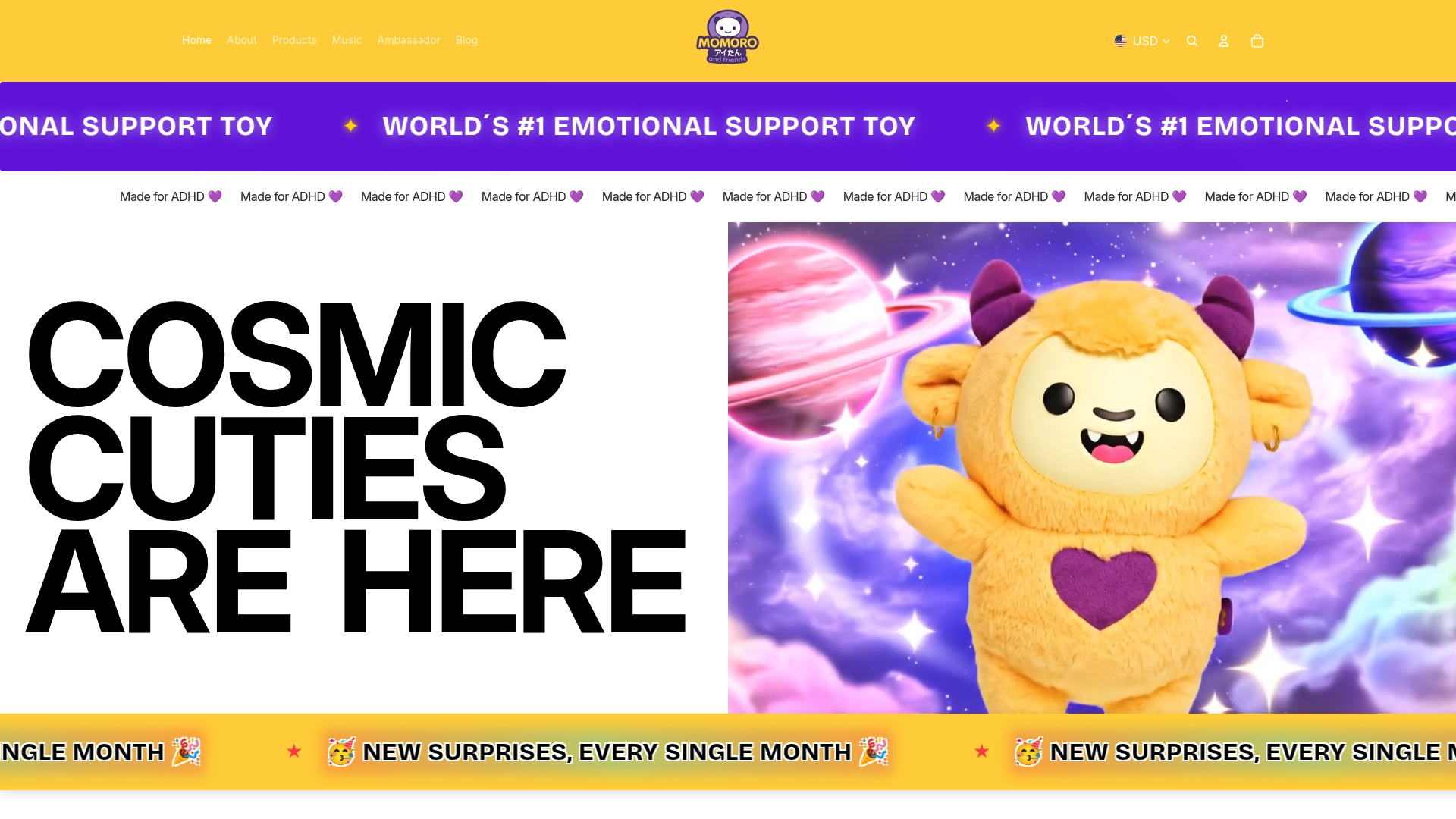
Take the next step towards reducing stress and mental clutter for your family by exploring the unique benefits of Japanese-Inspired Plush Toys for ADHD & Anxiety. Visit MOMORO today to experience the difference a thoughtfully designed tech companion can make.
Frequently Asked Questions
How do tech-enabled toys help improve focus for children with ADHD?
Tech-enabled toys enhance focus by providing structured engagement that makes concentration feel enjoyable. Consider integrating interactive tools during playtime to encourage your child to develop better focus habits over a few weeks.
In what ways can tech-enabled toys assist with emotional regulation for kids with ADHD?
These toys promote emotional regulation by using play to teach children how to recognise and manage their emotions. Provide your child access to such toys during high-emotion moments to reinforce their ability to cope independently within a month.
Can using tech-enabled toys reduce stress during daily routines?
Yes, tech-enabled toys can significantly decrease stress by organising daily essentials, which reduces chaos in family life. Implement a daily routine with the toy to help your child locate their belongings consistently, aiming for a smoother morning within three weeks.
What benefits do interactive toys provide for developing problem-solving skills?
Interactive toys promote independent problem-solving by offering adaptive challenges that engage children without overwhelming them. Encourage regular play with these toys to build your child’s confidence in tackling problems, which can strengthen their skills within a couple of months.
How do educational gifts from tech-enabled toys create sustained motivation for learning?
Educational gifts from these toys foster ongoing engagement by consistently unlocking new learning opportunities. Set a monthly reminder to celebrate these unlocks with your child to keep their enthusiasm for learning alive year-round.