

Finding calm during homework or busy mornings can feel impossible when your child has ADHD. British parents know that emotional regulation and focus are daily challenges, making supportive tools essential. Research from the University of York suggests that relationships with companion animals positively impact wellbeing for children with developmental conditions. Plush companions, especially interactive ones like MOMORO, offer multisensory comfort and practical support, helping your child feel secure and stay engaged throughout their day.
Table of Contents
- Plush Companions For ADHD Explained
- The MOMORO Difference
- How It Actually Helps During The Day
- How Interactive Features Support Focus
- MOMORO’s Interactive Design For Real Focus
- Real-World Focus Scenarios
- Benefits For Emotional Regulation And Routine
- How Plush Companions Support Emotional Regulation
- Building Routine With MOMORO
- Comparing Plush With Other ADHD Aids
- Plush Vs. Fidget Toys
- Plush Vs. Digital Apps And Games
- Plush Vs. Medication And Therapy
- Why Plush Companions Stand Out
- Common Mistakes When Using Plush Tools
- Mistake 1: Treating It Like Just Another Toy
- Mistake 2: Expecting Instant Behavioural Change
- Mistake 3: Letting It Become A Distraction
- Mistake 4: Not Integrating With Other Support
- Mistake 5: Forgetting To Check In
Key Takeaways
| Point | Details |
|---|---|
| Plush Companions Provide Emotional Support | They help children with ADHD regulate emotions and manage stress through tactile comfort. |
| MOMORO Offers Practical Utility | This interactive plush combines comfort with functionality, aiding organisation and focus. |
| Routine and Predictability are Key | Integrating plush companions into daily routines fosters emotional stability and predictability for children with ADHD. |
| Engagement Through Interactivity | The interactive features of plush companions keep ADHD minds engaged and focused without overwhelming them. |
Plush Companions for ADHD Explained
Plush companions are soft, tactile toys that go beyond just being cute – they’re designed to help children with ADHD regulate emotions, manage stress, and stay focused. Think of them as a portable comfort tool that doesn’t judge, doesn’t demand, and always works.
Unlike regular stuffed animals, interactive plush companions combine physical comfort with practical functionality. They sit in your pocket, hang on your bag, or rest on your desk when you need a moment of calm.
Why Plush Companions Work for ADHD Minds
Children with ADHD often struggle with emotional regulation and sensory overwhelm. A plush companion provides something tactile to hold onto – literally grounding them during moments of anxiety or distraction.
Companion animals show meaningful benefits for emotional and cognitive regulation, and plush companions offer similar support by creating attachment and security without the complexity of pet ownership.
When your child feels the soft texture or squeezes the plush in their hand, it activates their sensory system in a calming way. This isn’t random – it’s actual sensory regulation.
Key ways plush companions support ADHD children:
- Tactile grounding – Soft textures calm the nervous system when anxiety spikes
- Emotional anchor – A familiar companion reduces feelings of overwhelm in busy environments
- Focus aid – Holding something gives fidgety hands something productive to do
- Portable comfort – Always available, whether at school, in the car, or during homework
Plush companions work because they address both the emotional and physical aspects of ADHD regulation – they’re not just soft, they’re functional.
The MOMORO Difference
MOMORO isn’t just a plush toy you’ll abandon in a drawer. It’s designed specifically for ADHD minds, combining the comfort of a plush with genuine utility.
What makes MOMORO work as a 5-in-1 companion:
- Monthly calming gifts – unlocked via NFC, including focusing audio and mini games
- Keychain attachment – keeps essentials together instead of scattered
- Phone holder – hands-free support for any situation
- Key and headphone storage – stops the endless searching for what you’ve misplaced
- Detachable wallet – carry what you need without extra bags
The genius part? MOMORO reduces daily overwhelm by consolidating everything. No more searching for keys whilst also managing anxiety – that’s one less thing your ADHD brain has to process.
How It Actually Helps During the Day
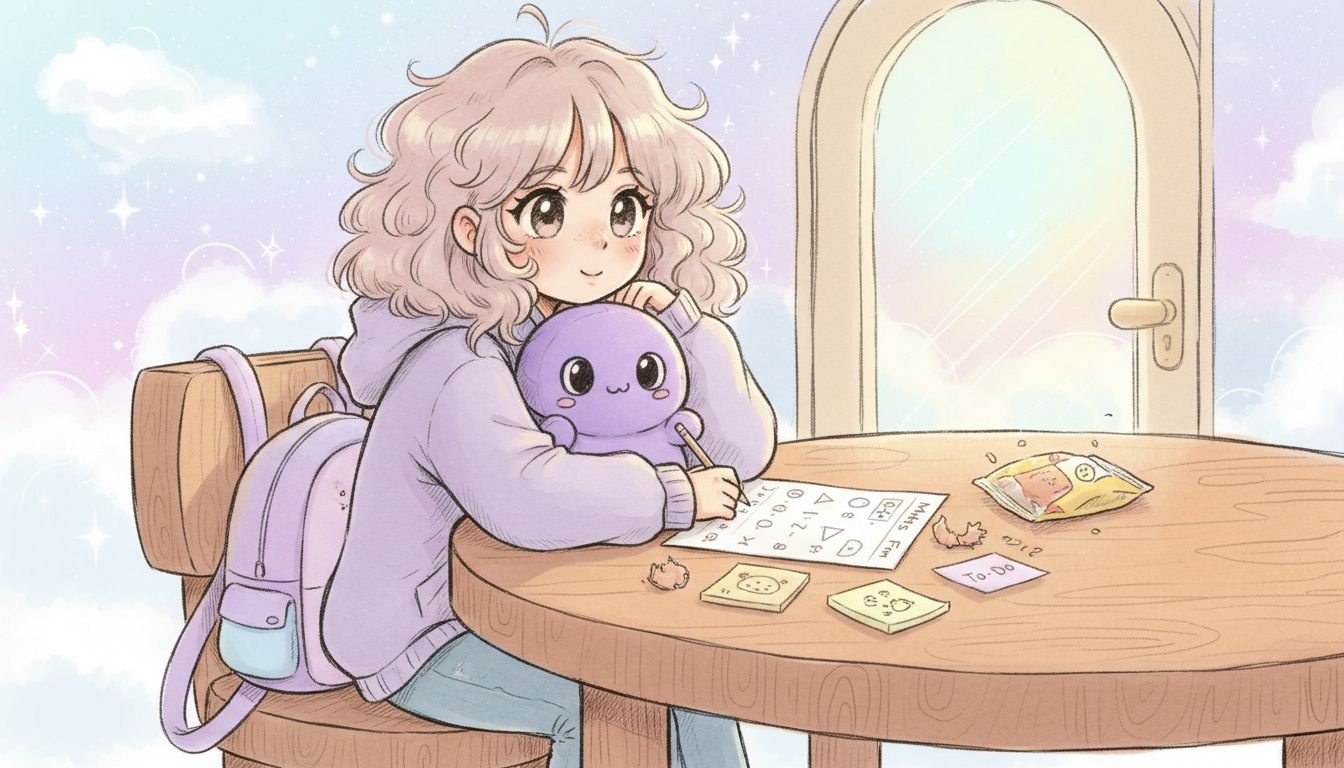
Your child sits down for homework. Instead of fidgeting with their pen, they squeeze MOMORO. The sensory input keeps their hands busy whilst their brain focuses on maths problems.
They’re waiting in a long queue at the supermarket – that moment of sensory overload hits. They pull out MOMORO, fidget with it, and calm their nervous system before meltdown happens.
They’ve forgotten where they put their headphones again. Instead of losing 10 minutes to frustration, they check MOMORO’s holder.
Small moments. Big difference.
Pro tip: Keep MOMORO somewhere your child can grab it during transitions – between lessons, before new activities, or when they start feeling wound up. Transitions are ADHD kryptonite, and having a familiar comfort tool ready makes them smoother.
How Interactive Features Support Focus
Interactive features aren’t just bells and whistles – they’re actually designed to keep ADHD brains engaged and focused. When a plush companion responds to what your child does, it creates a feedback loop that holds attention.
Think of it like this: a regular stuffed animal sits there. An interactive plush companion does something back. That difference matters massively for focus.
Why Interactivity Keeps ADHD Minds Engaged
Children with ADHD struggle with sustained attention, especially on tasks that feel boring or repetitive. Interactive features solve this by providing constant, novel stimulation that keeps the brain interested without overwhelming it.
Supportive tools that provide sensory stimuli help maintain focus by engaging attention in ways passive toys simply cannot. When a plush companion responds – whether through sound, texture, or unlocked features – it creates a reason to stay engaged.
This isn’t distraction masquerading as help. It’s strategic stimulation that channels restless energy into something productive.
How interactive features work for focus:
- Tactile feedback – Textures and weight ground sensory-seeking behaviour
- Reward loops – Unlocking new features keeps motivation high
- Routine anchors – Calming audio and games create predictable focus patterns
- Engagement without pressure – Interactive elements make focus feel less like work
Interactive features work because they match how ADHD brains actually function – by providing novelty and immediate feedback that keeps attention locked in.
MOMORO’s Interactive Design for Real Focus
MOMORO combines physical interactivity with digital rewards. Your child holds something tactile, squeezes it, and unlocks monthly calming gifts through NFC technology.
The monthly gifts aren’t random. They include focusing audio and mini-games designed specifically for ADHD minds, giving your child tools that actually support concentration.
What makes this work:
- Monthly surprises – New gifts keep the novelty factor high, preventing the “bored now” slump
- NFC unlocking – Physical interaction triggers digital rewards, reinforcing engagement
- Sensory input – The plush itself provides texture, weight, and tactile stimulation during focus sessions
- Portable tools – Calming audio and games work anywhere – homework desk, waiting room, car journey
Real-World Focus Scenarios
Your child sits down to do homework. They’re fidgeting already, mind drifting. They grab MOMORO, feel the familiar texture, tap the NFC feature, and unlock this month’s focusing audio.
Suddenly, they have a reason to sit still. The audio plays. Their brain settles. Homework happens.
They’re waiting at the dentist’s – that anxiety spiral starting. Instead of scrolling endlessly on a tablet, they interact with MOMORO’s games. Focus shifts from worry to engagement.
Small interactions. Big focus changes.
Pro tip: Use MOMORO’s monthly gifts as a routine – unlock them at the same time each month and listen to the focusing audio before challenging tasks. Routine + novelty is the ADHD focus sweet spot.
Benefits for Emotional Regulation and Routine
Emotional dysregulation is the silent killer of ADHD childhood. Your kid goes from zero to meltdown in seconds, and suddenly you’re managing a crisis instead of a moment. Plush companions help by creating a tangible anchor for calm when emotions spike.
They also build routine – which ADHD brains desperately need. Predictability reduces overwhelm. Having the same comfort tool at the same time each day signals to your child’s nervous system that stability is coming.
How Plush Companions Support Emotional Regulation
When your child feels an emotional storm building, a plush companion gives them something to hold, squeeze, and focus on. It’s not about ignoring the feeling – it’s about having a physical tool to regulate through it.
The tactile experience activates the parasympathetic nervous system, the part responsible for calming down. Step-by-step emotion regulation strategies work best when paired with physical grounding tools like a plush companion.
When your child squeezes MOMORO during a moment of frustration, they’re not just hugging something soft. They’re engaging their sensory system, redirecting anxious energy, and buying time for emotions to settle.
Key emotional regulation benefits:
- Immediate grounding – Physical sensation interrupts emotional spirals
- Safe outlet – Squeezing and fidgeting channels anxiety productively
- Emotional anchor – The plush becomes associated with calm moments
- Non-judgmental support – No criticism, just consistent comfort
Plush companions work for emotional regulation because they give the nervous system something to do whilst emotions settle – they’re a pause button for meltdowns.
Building Routine with MOMORO
Routine isn’t boring for ADHD kids – it’s protective. When the same thing happens at the same time each day, the brain stops fighting and starts cooperating.
MOMORO creates natural routine anchors. Morning transitions become easier when your child knows they’ll grab MOMORO and unlock the day’s calming audio. Bedtime winds down because the plush is part of the ritual.
Using plush companions for routine support transforms them from a toy into a structure-building tool. Instead of fighting your kid to sit down for homework, MOMORO becomes the signal that focus time is starting.
Routine ideas with MOMORO:
- Morning grab – Start the day by holding MOMORO whilst listening to calming audio
- Transition tool – Use it between activities to signal “we’re moving to something new”
- Homework anchor – MOMORO sits on the desk during study time
- Bedtime companion – Final calming ritual before sleep
Emotion + Routine = Stability
The magic happens when emotional regulation and routine combine. Your child develops a system they can rely on, not just a toy they occasionally use.
When emotions get big, they know MOMORO is there. When routine calls, MOMORO answers. Predictability breeds confidence. Confidence breeds calmer, more focused kids.
This summary highlights how plush companions help both emotional and practical needs for ADHD children:
| Area Addressed | Plush Impact | Example Scenario |
|---|---|---|
| Emotional Calm | Provides grounding | Calms pre-meltdown moments |
| Sensory Regulation | Soft tactile feedback | Anxiety relief during transitions |
| Routine Structure | Anchors daily tasks | Smooths homework time changes |
| Practical Utility | Organises essentials | Prevents lost keys and headphones |
Pro tip: Introduce MOMORO into your existing routines first – don’t create new routines around it. If your child already has a bedtime ritual, add MOMORO to that moment. If homework time exists, make MOMORO part of it. This way, the plush reinforces what’s already working instead of adding pressure.
Comparing Plush with Other ADHD Aids
There’s no shortage of ADHD support tools out there. Fidget spinners, stress balls, medication, therapy, apps, weighted blankets – the list goes on. So where do plush companions fit in, and are they actually worth it compared to everything else?
Honest answer: they’re not a replacement for the big stuff. But they’re a complement that does something nothing else quite manages.
Plush vs. Fidget Toys
Fidget toys are designed for one thing: giving your hands something to do. Spinners, pop-its, tangles – they work when your kid needs immediate sensory input.
Plush companions do that, but they add emotional comfort on top. A fidget toy is about distraction. A plush is about grounding and connection. You can fidget with MOMORO whilst also feeling safe and supported.
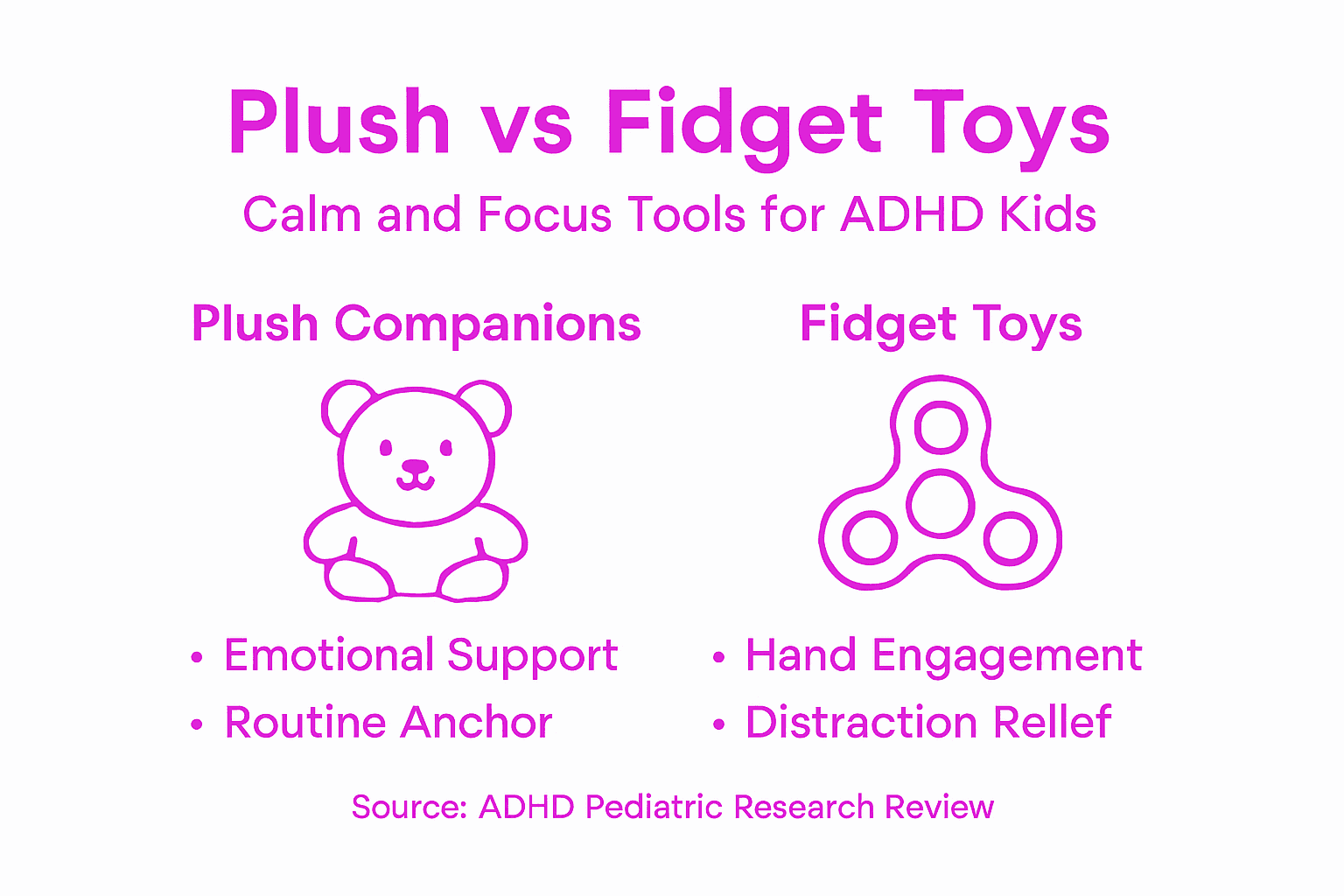
Fidget toys also get boring fast. Your child masters them, and the novelty dies. Plush companions maintain engagement through multisensory experiences that fidget toys simply cannot provide.
Key differences:
- Fidget toys – Pure motion, high novelty, gets old quickly
- Plush companions – Tactile plus emotional, portable routine anchor, stays relevant
Plush vs. Digital Apps and Games
ADHD apps promise focus support through gamification and tracking. Some work. Many feel like another screen your kid is already tired of staring at.
Plush companions are tactile and physical. They don’t add screen time. They reduce it by giving your child something non-digital to engage with during moments when focus is slipping.
MOMORO unlocks monthly digital gifts, so you get the best of both – tactile comfort with occasional digital rewards. No endless scrolling. No app fatigue. Just purposeful interaction.
Core distinction:
- Digital apps – Screen-based, can increase overwhelm, requires motivation to use
- Plush companions – Physical first, digital as bonus, naturally fits into daily routines
Plush vs. Medication and Therapy
This matters: plush companions are not replacements for medication or CBT (Cognitive Behavioural Therapy). Primary ADHD treatments include medication and structured therapy – these address the core condition.
Plush companions complement these. They’re what happens between therapy sessions, alongside medication, when your child needs grounding at school or at home.
Think of it this way: medication and therapy are the foundation. Plush companions are the everyday tool that makes the foundation feel more stable.
What they do differently:
Here’s a side-by-side view of popular ADHD support tools and their unique strengths:
| Tool Type | Core Benefit | Limitation | Complementary Use |
|---|---|---|---|
| Plush Companions | Emotional and tactile support | Not clinical treatment | Daily grounding and routine |
| Fidget Toys | Immediate sensory input | Novelty fades quickly | Brief calming during stress |
| Apps and Games | Focus tracking via screens | Screen fatigue risk | Digital reward for engagement |
| Medication/Therapy | Clinical improvement | Requires prescription | Builds foundation for other tools |
- Medication – Addresses neurological pathways (clinical treatment)
- Therapy – Builds coping skills (structured intervention)
- Plush companions – Provides daily emotional anchor (preventative support)
Plush companions aren’t ADHD treatment – they’re ADHD support. The difference is critical. Treatment fixes the condition; support makes living with it calmer.
Why Plush Companions Stand Out
MOMORO combines what other tools can’t: tactile comfort, emotional anchor, functional utility (keychain, phone holder, wallet), and monthly interactive rewards. You’re not choosing between a toy, a fidget tool, and an organisational system – you get all of it.
No other single tool does this. That’s what makes plush companions genuinely different.
Pro tip: Don’t replace medication or therapy with plush companions – layer them together. MOMORO works best when your child has professional ADHD support already in place. Use the plush to bridge gaps between sessions and reinforce what therapy teaches.
Common Mistakes When Using Plush Tools
Plush companions work brilliantly when used properly. But plenty of parents buy them with big expectations and then watch them gather dust because they’re not using them right. Here are the pitfalls to avoid.
The good news? These mistakes are all fixable. Once you know what’s going wrong, you can actually get results.
Mistake 1: Treating It Like Just Another Toy
This is the biggest one. Parents buy MOMORO thinking it’s a stuffed animal their child will cuddle occasionally. Then they’re surprised when nothing changes.
Plush companions work best when treated as emotional support tools, not mere toys. The difference matters. A toy sits on a shelf. A tool gets used intentionally.
MOMORO needs to be introduced as part of a routine or a calming strategy, not just handed over and forgotten. Your child needs to understand it’s their focus buddy, their grounding anchor, their routine partner.
How to fix it:
- Talk about MOMORO’s purpose before introducing it
- Build it into existing routines (not as an afterthought)
- Model using it yourself if you’re comfortable
- Treat it like a strategy, not a gift
Mistake 2: Expecting Instant Behavioural Change
Some parents expect that the moment their child holds MOMORO, homework battles stop and calm magically happens. It doesn’t work that way. Plush companions support change – they don’t create it overnight.
Your child still has ADHD. The plush doesn’t cure anything. It helps them regulate better, focus longer, and calm faster. Those are real benefits, but they’re gradual.
Give it time. Real changes show up over weeks, not days.
Realistic expectations:
- Week 1-2: Curiosity, novelty engagement
- Week 3-4: Routine starts forming, some calming benefits emerge
- Month 2+: Noticeable shifts in focus and emotional regulation
Mistake 3: Letting It Become a Distraction
Here’s the paradox: something designed for calm can become a source of distraction if overused. Your child spends homework time fidgeting with MOMORO instead of actually doing maths. That’s a sign they need boundaries.
A tool needs structure. MOMORO works during transitions, before focus sessions, or when emotions are rising. It doesn’t work if your child is playing with it constantly during tasks that require actual attention.
Watch your child. If MOMORO is becoming procrastination rather than support, it’s time to set clearer guidelines about when it’s appropriate to use.
Boundary ideas:
- Use MOMORO before homework starts, not during
- Hold it during transitions, not throughout lessons
- Grab it when emotions spike, not when avoiding tasks
- Return it to its designated spot when focus time begins
Mistake 4: Not Integrating with Other Support
Plush companions work best alongside other ADHD strategies – therapy, medication, routine, structure. Using MOMORO alone, without any other support system, is like having a parachute but no plane to jump from.
The strongest approach layers tools together. MOMORO supports what therapy teaches. It reinforces routines your child is learning. It gives them something to do with their hands whilst medication helps their brain focus.
Plush tools fail when isolated. They succeed when woven into a complete ADHD support strategy that includes professional help, family routines, and clear expectations.
Mistake 5: Forgetting to Check In
After a few weeks, some parents stop paying attention to whether MOMORO is actually helping. They assume it’s working and move on. Without feedback, you can’t know if it’s genuinely supporting your child or just sitting there.
Ask your child regularly. Is MOMORO helping during focus time? Does it calm them down? Are they using it intentionally or forgetting about it? Their honest answer tells you whether to adjust how you’re using it.
Pro tip: Have a quick monthly check-in with your child about MOMORO – not formal, just casual. “Is this still working for you? Do you need to use it differently?” Their feedback helps you course-correct before months of non-use happen.
Discover How Plush Companions Can Transform Focus and Calm for Your Child with ADHD
Children with ADHD often face challenges like emotional overwhelm, difficulty focusing, and sensory overload. The article highlights how plush companions provide much-needed tactile grounding and emotional support during stressful moments or busy transitions. MOMORO takes this concept further by combining calming tactile comfort with practical features designed specifically for ADHD minds including monthly calming gifts, key and headphone storage, and a detachable wallet for essentials. This multi-functional approach helps reduce stress and mental clutter while encouraging calm daily routines without pressure.
Explore the unique benefits of MOMORO and Friends with our Shop Japanese-Inspired Plush Toys for ADHD & Anxiety – MOMORO & Friends collection. Designed to support emotional regulation and improve focus, MOMORO is more than a toy – it is a 5-in-1 companion that fits seamlessly into your child’s daily life. For a fuller understanding of how MOMORO complements professional ADHD support and therapy, visit our homepage and see how simple tools make a big difference. Take the step today to help your child carry calm and focus wherever they go.
Frequently Asked Questions
What are plush companions and how do they help children with ADHD?
Plush companions are soft, tactile toys designed to assist children with ADHD in regulating their emotions and managing stress. They provide tactile grounding, emotional support, and a focus aid, making them effective tools for enhancing concentration and reducing anxiety.
How does MOMORO differ from regular stuffed animals?
MOMORO is a 5-in-1 companion specifically designed for ADHD, combining comfort with practical features like a keychain attachment, phone holder, and monthly calming gifts that encourage focus. Unlike regular stuffed animals, it supports emotional regulation and enhances engagement through its interactive capabilities.
How can plush companions support emotional regulation for kids with ADHD?
Plush companions like MOMORO provide a tangible anchor for children when emotions spike. They offer immediate grounding through physical sensation, channel anxious energy productively, and create a sense of safety during overwhelming moments.
Are plush companions effective compared to other ADHD tools like fidget toys?
Yes, plush companions offer both tactile comfort and emotional support, whereas fidget toys mainly focus on sensory input. Plush companions maintain engagement longer due to their multisensory experiences, providing grounding and connection, making them a valuable complement to other ADHD tools.
Recommended
- Educational Value of Plush Toys for ADHD Support – MOMORO & Friends
- Why Plush Toys Are Comforting for ADHD Children – MOMORO & Friends
- Why Use Interactive Toys for ADHD Minds – MOMORO & Friends
- Why Plush for ADHD Support Matters for UK Kids – MOMORO & Friends
- Cozee Bay - Understanding Bamboo vs Plastic Organizers: A Comprehensive Guide