

Every parent faces those moments when even simple social situations can leave their child feeling anxious or overwhelmed. For children with ADHD, the fear of what others might think can cause real emotional hurdles and disrupt daily life. Learning to spot the triggers behind these feelings and using calming interactive toys offers a practical path for building confidence and resilience. Discover how specific tools and playful routines can help your child handle social stress while nurturing their emotional well-being.
Table of Contents
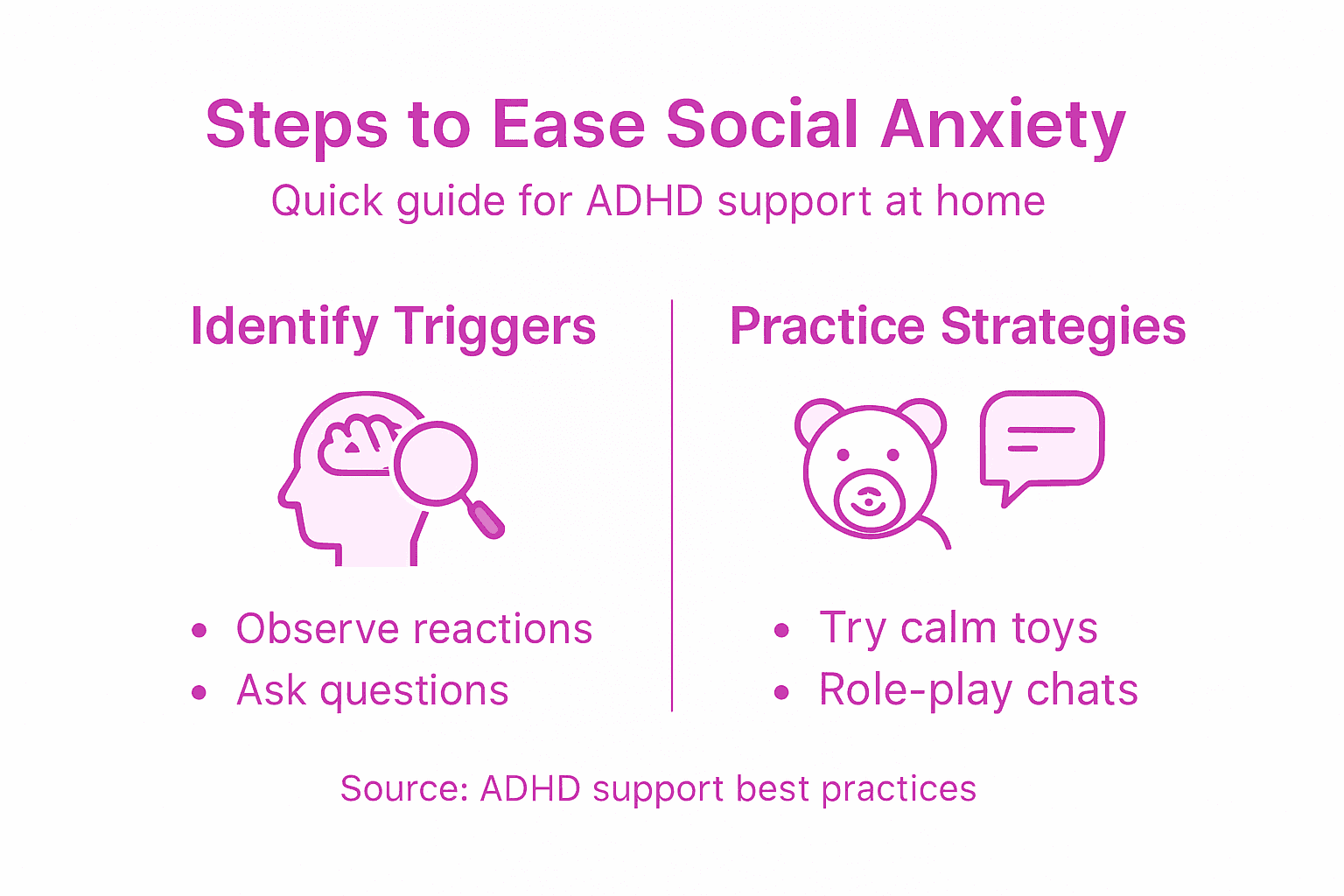
- Step 1: Identify Social Anxiety Triggers In Daily Life
- Step 2: Introduce Calming Interactive Toys At Home
- Step 3: Practise Social Scenarios With Playful Routines
- Step 4: Encourage Peer Interaction Using Comfort Items
- Step 5: Monitor Progress And Adjust Strategies
Quick Summary
| Key Takeaway | Explanation |
|---|---|
| 1. Identify specific anxiety triggers | Recognizing situations that provoke anxiety helps parents and children develop coping strategies and reduce emotional stress. |
| 2. Use calming interactive toys | Introducing sensory toys at home supports emotional regulation and helps channel anxiety into positive experiences. |
| 3. Practice social skills through play | Role-playing social scenarios in a fun way builds confidence and enhances communication skills for children with social anxiety. |
| 4. Implement comfort items for social interactions | Offering familiar objects during social engagements provides emotional security, helping children interact more confidently with peers. |
| 5. Consistently monitor progress | Keeping a detailed record of your child’s social development enables adjustments in strategies and celebrates small achievements over time. |
Step 1: Identify social anxiety triggers in daily life
Understanding and identifying social anxiety triggers is crucial for children with ADHD in managing their emotional responses. By recognising specific situations that provoke anxiety, parents and children can develop targeted strategies to reduce stress and build confidence.
Children with social anxiety often experience intense emotional reactions in specific social scenarios. Common anxiety triggers can vary widely but frequently include:
- Answering questions in class
- Eating lunch with peers
- Meeting new people
- Speaking in front of groups
- Participating in team activities
- Situations involving potential judgment or criticism
To effectively identify triggers, start by observing and documenting your child’s emotional responses. Pay attention to physical signs like increased heart rate, sweating, trembling, or verbal cues such as expressing worry about specific social interactions. Keep a detailed journal noting:
Here is a summary of social anxiety triggers and ways parents can spot them:
| Trigger Situation | Common Emotional Response | Physical Signs | Parental Observation Tip |
|---|---|---|---|
| Speaking in class | Nervousness, fear | Sweating, trembling | Ask about specific lesson worries |
| Team activities | Self-doubt, withdrawal | Avoids eye contact | Note reluctance before group events |
| Meeting new people | Shyness, worry | Fidgeting, quiet speech | Encourage gentle introductions |
| Eating with peers | Embarrassment, discomfort | Loss of appetite | Observe eating habits at school |
| Judgement scenarios | Panic, sadness | Rapid heartbeat | Discuss feelings after social events |
- The specific situation
- Emotional response intensity
- Physical symptoms
- Potential underlying fears
Understanding triggers is the first step towards helping your child develop coping mechanisms and build emotional resilience.
Engaging in open, non-judgmental conversations with your child can also help uncover hidden anxieties. Ask gentle questions about their feelings and listen carefully to their responses. Recognising emotional triggers helps manage symptoms by allowing proactive emotional regulation.
Top tip: Create a safe, supportive environment where your child feels comfortable discussing their social anxieties without fear of criticism or misunderstanding.
Step 2: Introduce calming interactive toys at home
Creating a supportive home environment for children with ADHD involves strategically introducing interactive toys that help manage anxiety and restlessness. Sensory tools can significantly support children’s emotional regulation by providing structured, engaging experiences that channel excess energy positively.
When selecting calming interactive toys, consider options that offer sensory stimulation and emotional support:
- Fidget spinners and tactile widgets
- Soft plush toys with interactive features
- Weighted blankets or pressure cushions
- Stress-relief squeeze toys
- Puzzle-based sensory games
- Noise-cancelling headphones
Introduce these toys gradually, observing how your child responds to different textures, sounds, and interactions. The goal is to find tools that:
This table compares types of interactive toys and their specific benefits in supporting children with ADHD:
| Interactive Toy Type | Sensory Input Provided | Emotional Impact | Best Usage Scenario |
|---|---|---|---|
| Fidget spinners/widgets | Tactile, movement | Reduces restlessness | During homework or quiet moments |
| Weighted blankets/cushions | Pressure, comfort | Eases anxiety | Before bedtime or relaxation time |
| Puzzle games | Cognitive, focus | Encourages engagement | Breaks between activities |
| Noise-cancelling headphones | Auditory isolation | Lowers overstimulation | Busy or noisy environments |
- Provide gentle sensory input
- Help reduce anxiety
- Promote emotional self-regulation
- Offer a sense of comfort and security
Interactive toys are not just playthings but therapeutic tools that can help children with ADHD manage their emotional landscape.
Encourage your child to explore these toys independently, creating a safe space where they can experiment with self-soothing techniques. Pay attention to their preferences and emotional responses, adjusting your approach accordingly.

Top tip: Create a dedicated ‘calm corner’ with a selection of interactive toys, allowing your child to retreat and self-regulate when feeling overwhelmed.
Step 3: Practise social scenarios with playful routines
Role-playing social interactions offers a powerful strategy for helping children with ADHD and social anxiety build confidence and communication skills. By transforming potentially stressful scenarios into engaging, low-pressure games, parents can help their children develop crucial social strategies in a supportive environment.
Design playful social scenario practice with these interactive approaches:
- Create themed role-playing scenarios
- Use puppets or stuffed animals as conversation partners
- Develop turn-taking games
- Practice emotional recognition through facial expression games
- Use video recordings for gentle feedback
- Implement reward systems for successful interactions
When practising social scenarios, follow these key steps:
- Choose a specific social situation to explore
- Demonstrate the interaction first
- Allow your child to practice
- Provide constructive, positive feedback
- Repeat the scenario with variations
Playful practice transforms intimidating social challenges into opportunities for growth and learning.
Social scenario practice builds confidence by breaking down complex interactions into manageable, enjoyable experiences. Approach these sessions with patience, creativity, and a sense of fun, recognising that each small success is a significant step towards social comfort.
Top tip: Keep practice sessions short, engaging, and lighthearted to prevent overwhelming your child and maintain their enthusiasm for learning.
Step 4: Encourage peer interaction using comfort items
Comfort items can transform social interactions for children with ADHD, providing a sense of security that enables more confident peer engagement. These familiar objects act as emotional anchors, helping children navigate potentially overwhelming social situations with greater ease and comfort.
Strategies for introducing comfort items during social interactions include:
- Select portable comfort objects
- Discuss item significance with other parents
- Explain comfort item’s role to potential playmates
- Create structured play scenarios
- Establish clear sharing guidelines
- Practice gradual social exposure
When encouraging peer interaction with comfort items, follow these essential steps:
- Choose appropriately sized comfort objects
- Prepare your child for social interactions
- Communicate boundaries with other children
- Monitor and support interaction
- Celebrate small social successes
Comfort items are bridges that help children cross challenging social landscapes with confidence.
Emotional regulation through comfort objects enables children to feel more grounded and secure during social encounters. By treating these items as valuable tools rather than limitations, parents can help their children build meaningful connections.
Top tip: Always have a backup comfort item and maintain a positive, matter-of-fact attitude about its use to help normalise the experience for your child.
Step 5: Monitor progress and adjust strategies
Tracking your child’s social development requires consistent observation and flexible problem-solving. Understanding that progress is rarely linear helps parents approach monitoring with patience and compassion, recognising each small improvement as a significant milestone.
Effective monitoring strategies include:
- Maintain a detailed progress journal
- Schedule regular check-ins with teachers
- Track emotional and behavioural patterns
- Note specific social skill improvements
- Identify consistent triggers and successful coping mechanisms
- Document your child’s self-reported experiences
When monitoring your child’s progress, consider these essential steps:
- Set realistic, measurable goals
- Create a consistent tracking system
- Involve multiple perspectives (teachers, therapists, family)
- Review and adjust strategies quarterly
- Celebrate incremental achievements
Small, consistent changes lead to significant long-term improvements in social confidence.
Behaviour management requires ongoing assessment of what interventions are most effective. This means being willing to modify approaches, seek professional guidance, and remain adaptable to your child’s evolving needs.
Top tip: Use digital tracking apps or a dedicated notebook to document progress objectively, helping you visualise your child’s developmental journey.
Discover Comfort and Calm with MOMORO & FRIENDS for Children with ADHD
Helping children manage social anxiety caused by ADHD requires thoughtful tools that provide both emotional support and sensory comfort. This guide highlighted how interactive toys and comfort items can ease intense feelings like nervousness, panic, and overwhelm during social situations. MOMORO & FRIENDS offers a unique solution designed specifically to bring calm and boost confidence for children navigating these emotional challenges.

Explore the world’s first Interactive Collectible plush that combines tactile comfort with engaging digital gifts tailored to ease stress and lift moods every month. With only 5,000 units per drop, MOMORO offers a rare, limited experience that supports self-regulation and emotional resilience in a gentle, creative way. Visit MOMORO & FRIENDS today to bring a loving companion into your child’s calming routine. Start building a safe space for social confidence and emotional growth now.
Frequently Asked Questions
How can I identify social anxiety triggers in my child with ADHD?
To identify social anxiety triggers, observe your child’s emotional responses in various situations. Keep a journal documenting specific scenarios, emotional responses, and physical signs, helping you pinpoint triggers and develop coping strategies.
What are some calming interactive toys that can help my child with ADHD?
Consider introducing toys such as fidget spinners, weighted blankets, or puzzle games that provide sensory input. Gradually introduce them and observe your child’s preferences to find what helps reduce their anxiety effectively.
How can role-playing social situations improve my child’s confidence?
Role-playing allows your child to practice social interactions in a fun and low-pressure environment. Set up themed scenarios and encourage your child to engage, providing positive feedback to help them build their communication skills.
What comfort items should I introduce for my child during social interactions?
Choose portable comfort items, like a favourite soft toy or a stress ball, that your child can use during social interactions for reassurance. Explain their purpose clearly, so your child understands how these items can help them feel more secure.
How do I monitor my child’s progress in managing social anxiety?
Keep a detailed progress journal that tracks emotional and behavioural patterns alongside specific social skills. Regularly review this journal every few weeks to adjust your strategies and celebrate any small improvements your child makes.
How often should I check in with my child about their social anxiety?
Aim to check in with your child at least once a week to discuss their feelings and experiences related to social interactions. This ongoing communication fosters trust and allows you to address any emerging anxieties in real time.
Recommended
- How to Develop Emotional Literacy for Children with ADHD – MOMORO & Friends
- Step by Step Emotion Regulation ADHD Guide for Parents – MOMORO & Friends
- Guide to Stress Reduction for Parents of ADHD Children – MOMORO & Friends
- 7 Ways to Use Plush for Anxiety in Children with ADHD – MOMORO & Friends
- 8 Essential Tips for Camping with Children – Hazli Collection