

Every parent wants their child to feel safe when big emotions come rushing in, but for families raising children with ADHD, emotional storms can appear with little warning. Creating a supportive environment rich in trust and respect builds the foundation for children to explore their feelings. By combining structured emotional literacy resources and fun, interactive collectibles, parents across the United Kingdom can offer their children meaningful tools for anxiety relief and emotional growth. You will discover emotional literacy strategies and engaging aids designed to bring comfort and confidence to everyday life.
Table of Contents
- Step 1: Prepare A Supportive Environment For Emotional Learning
- Step 2: Introduce Interactive Tools That Promote Emotional Awareness
- Step 3: Guide Children In Naming And Expressing Feelings
- Step 4: Encourage Mindfulness Through Engaging Activities
- Step 5: Assess Progress And Reinforce Positive Emotional Habits
Quick Summary
| Key Point | Explanation |
|---|---|
| 1. Establish psychological safety | Create an environment where children feel heard and validated to explore their emotions safely. |
| 2. Use interactive tools for engagement | Incorporate games, emotion cards, and apps to make emotional learning enjoyable and effective. |
| 3. Practice naming feelings daily | Help children articulate their emotions through consistent conversations and visual aids for better understanding. |
| 4. Implement mindfulness activities | Introduce fun and engaging mindfulness exercises to help children manage their emotions and enhance self-regulation. |
| 5. Track emotional progress consistently | Use visual charts and communication logs to monitor emotional growth and celebrate achievements in emotional literacy. |
Step 1: Prepare a supportive environment for emotional learning
Creating a nurturing space for children with ADHD to develop emotional literacy requires thoughtful strategy and consistent approach. A supportive environment helps children feel safe exploring and understanding their complex emotions.
Key elements of establishing an emotionally supportive environment include:
- Creating psychological safety where children feel heard and validated
- Maintaining consistent and predictable communication patterns
- Developing non-judgmental listening skills
- Demonstrating emotional regulation through personal example
Research indicates that creating a supportive learning environment involves building trust and respect between parents and children. This means being sensitive to individual emotional needs and fostering an atmosphere of understanding.
Parents can achieve this by establishing clear emotional boundaries while simultaneously offering warmth and empathy. Positive communication strategies help children with ADHD feel secure in expressing their feelings without fear of criticism or dismissal.
Children with ADHD need environments that validate their emotional experiences while providing structured guidance.
Consistent emotional support involves active listening, reflecting back their feelings, and helping them develop appropriate emotional vocabulary. By modelling healthy emotional responses and offering patient guidance, parents can help their children build crucial emotional regulation skills.
Helpful hint: Create a dedicated calm space at home where your child can retreat and process emotions safely when feeling overwhelmed.

Step 2: Introduce interactive tools that promote emotional awareness
Helping children with ADHD develop emotional literacy requires creative and engaging approaches that transform complex emotional learning into enjoyable experiences. Interactive tools offer an exciting pathway to understanding and expressing feelings in a structured yet dynamic manner.
Key interactive tools for emotional awareness include:
- Emotion cards with visual representations of different feelings
- Digital mood tracking applications
- Interactive storytelling resources
- Sensory engagement tools that encourage emotional expression
Research suggests that social and emotional learning tools can significantly support children’s emotional development through collaborative and participative learning strategies. Interactive resources like games, role-playing scenarios, and digital applications provide structured opportunities for children to recognise and understand their emotions.
Specifically for children with ADHD, emotion identification tools such as mood meters and interactive storybooks help build crucial self-regulation skills. These resources offer visual and engaging methods for children to explore and articulate their feelings in a safe, supportive environment.
Interactive tools transform emotional learning from a challenging task into an exciting journey of self-discovery.
Parents and educators can introduce these tools gradually, allowing children to interact at their own pace and comfort level. The key is to make emotional exploration feel like play rather than a serious intervention, thereby reducing potential resistance and increasing engagement.
Helpful hint: Choose interactive tools that match your child’s specific interests to maximise their engagement and emotional learning potential.
Step 3: Guide children in naming and expressing feelings
Learning to articulate emotions is a critical skill for children with ADHD, transforming overwhelming feelings into manageable experiences. This step involves creating a supportive framework that helps children understand and communicate their inner emotional landscape.
Effective strategies for emotional expression include:
- Creating an emotion vocabulary with descriptive feeling words
- Using visual emotion charts
- Practicing emotion mirroring techniques
- Developing consistent emotional check-in routines
Managing emotional dysregulation involves teaching children to recognise and label their feelings with precision. By breaking down complex emotions into identifiable components, children can begin to understand and control their emotional responses more effectively.
Encouraging open dialogue requires a non-judgmental approach. Validating children’s emotional experiences helps them feel heard and understood, reducing the intensity of emotional reactions and building trust.
Emotional literacy is not about controlling feelings, but understanding them.
Parents can model emotional articulation by sharing their own feelings openly and demonstrating healthy emotional processing. This approach helps children learn that all emotions are acceptable and can be expressed constructively.
Helpful hint: Create a daily ‘feelings check-in’ ritual where your child can safely share their emotional experience without fear of criticism.
Step 4: Encourage mindfulness through engaging activities
Mindfulness offers children with ADHD a powerful toolkit for managing overwhelming emotions and improving self-regulation. By transforming complex emotional experiences into playful, interactive exercises, we can help them develop crucial emotional awareness skills.
Mindfulness activities designed for children with ADHD include:
- Guided breathing exercises with visual cues
- Sensory-based meditation techniques
- Emotion tracking games
- Interactive body scan activities
- Storytelling mindfulness experiences
Mindfulness techniques for emotional regulation can significantly reduce emotional intensity and improve focus. Acceptance and commitment therapy approaches help children observe their thoughts and feelings without judgment, creating a foundation for emotional understanding.
Psychological research emphasises that structured mindfulness exercises provide children with ADHD practical strategies for calming their nervous system and decreasing impulsive reactions. These activities transform emotional challenges into opportunities for growth and self-discovery.
Mindfulness is not about perfection, but about gentle, curious awareness.
Consistent practice is key. Parents should approach these activities with patience, making them feel like engaging games rather than serious interventions. The goal is to create a positive, supportive environment where emotional exploration feels safe and enjoyable.
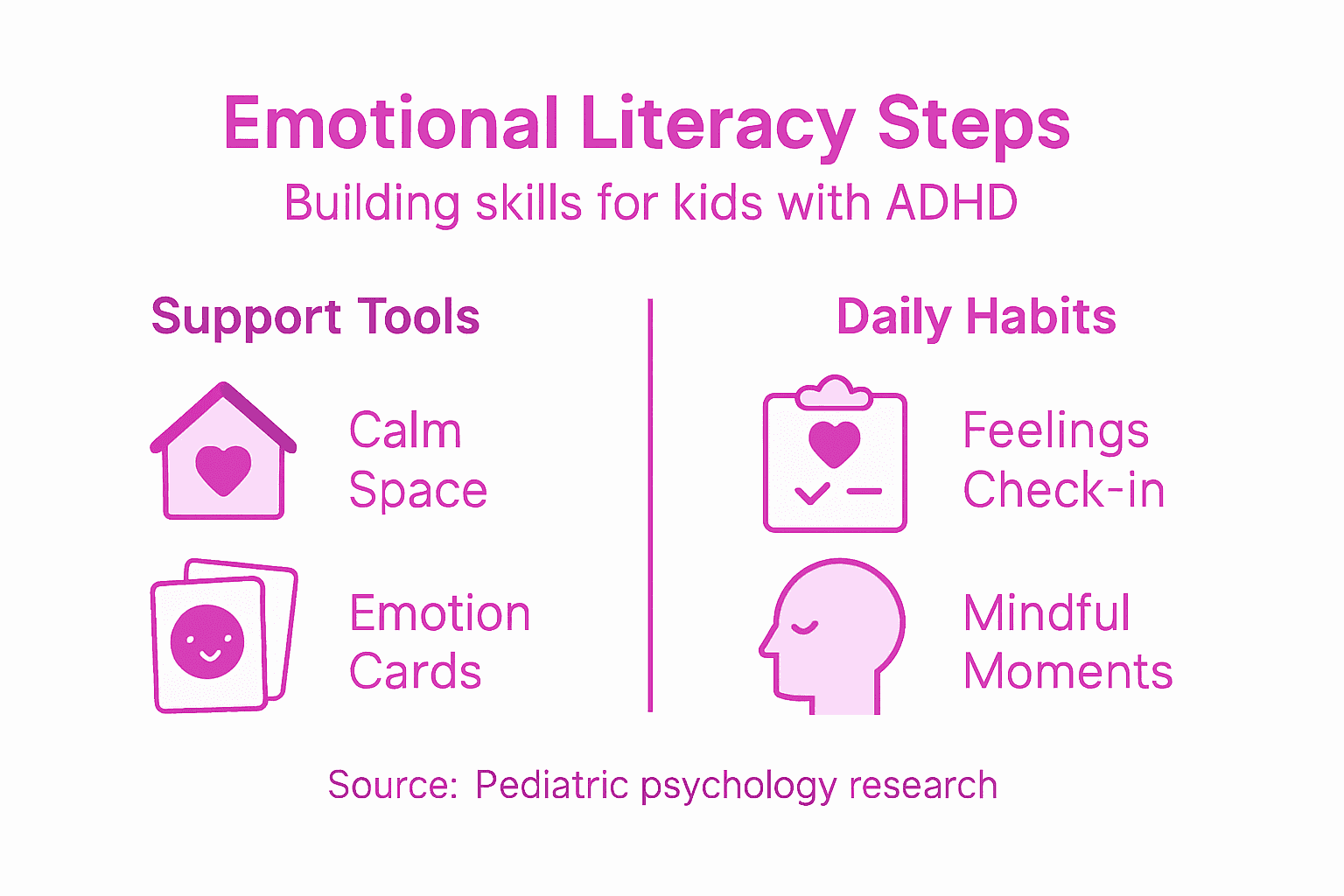
Helpful hint: Create a special ‘mindfulness moment’ with a favourite plush companion to make the experience more comforting and fun.
Step 5: Assess progress and reinforce positive emotional habits
Tracking emotional development for children with ADHD requires a thoughtful, compassionate approach that celebrates small victories and provides consistent, constructive feedback. This step focuses on creating a supportive system that acknowledges growth and motivates continued emotional learning.
Key strategies for assessing emotional progress include:
- Creating visual progress tracking charts
- Maintaining regular communication logs
- Setting realistic, incremental emotional goals
- Implementing positive reinforcement techniques
- Documenting emotional regulation milestones
Ongoing assessment of emotional progress involves gathering feedback from multiple sources, including parents, teachers, and the children themselves. This holistic approach helps tailor interventions and provides a comprehensive view of emotional development.
Collaboration between educators, parents, and healthcare providers is crucial. Behavioural management strategies that emphasise positive reinforcement can significantly improve emotional regulation skills and build long-term resilience.
Progress is not about perfection, but about consistent, compassionate growth.
Remember that emotional literacy is a journey. Celebrate each small step, maintain patience, and focus on building a supportive environment that encourages emotional exploration and understanding.
Helpful hint: Create a special ‘emotional achievement’ journal where your child can document and reflect on their emotional growth milestones.
Support Emotional Literacy with Calm and Comfort from MOMORO & FRIENDS
Children with ADHD often face challenges in recognising and expressing their emotions clearly. This article highlights the importance of creating a supportive environment and using interactive tools to develop emotional literacy. Key goals include helping children name their feelings, practice mindful awareness, and build emotional regulation skills through compassionate guidance. MOMORO & FRIENDS offers a unique solution that blends comfort, creativity, and technology to meet these needs.

Discover how MOMORO & FRIENDS’ interactive collectible plush toys provide a calming presence and monthly digital gifts designed to ease stress and enhance mood for children with ADHD. These limited edition NFC-enabled companions create a safe emotional space that aligns perfectly with strategies like mindfulness and emotional check-ins discussed in the article. Explore more at MOMORO & FRIENDS and bring home a trusted partner in your child’s emotional development today.
Frequently Asked Questions
How can I create a psychologically safe environment for my child with ADHD?
To create a psychologically safe environment, focus on validating your child’s feelings and maintaining consistent communication patterns. Establish clear emotional boundaries while providing warmth and empathy, ensuring your child feels secure sharing their emotions.
What interactive tools can I use to promote emotional awareness in children with ADHD?
To promote emotional awareness, consider using emotion cards, mood tracking applications, and interactive storytelling resources. Introduce these tools gradually to make emotional exploration feel like play, enhancing engagement and understanding.
How can I help my child articulate their emotions effectively?
To help your child articulate their emotions, create a vocabulary of descriptive feeling words and practice using visual emotion charts. Encourage open dialogue in a non-judgmental manner, allowing your child to share their feelings without fear of criticism.
What mindfulness activities are beneficial for children with ADHD?
Beneficial mindfulness activities include guided breathing exercises, sensory-based meditation techniques, and interactive body scan activities. Integrate these exercises into your daily routine to improve emotional regulation and help your child manage overwhelming emotions.
How can I assess my child’s emotional progress in a supportive way?
To assess your child’s emotional progress, create visual tracking charts and maintain regular communication logs. Set realistic goals and celebrate small milestones to encourage continued emotional learning, focusing on growth rather than perfection.
What is the importance of positive reinforcement in developing emotional literacy?
Positive reinforcement is crucial as it builds your child’s confidence and encourages them to engage in healthy emotional expression. Implement rewarding strategies that acknowledge their efforts, making the emotional learning journey more enjoyable and motivating.
Recommended
- Guide to Stress Reduction for Parents of ADHD Children – MOMORO & Friends
- How to Handle Emotional Dysregulation with Calm Strategies – MOMORO & Friends
- Educational Value of Plush Toys for ADHD Support – MOMORO & Friends
- Why Plush Toys Are Comforting for ADHD Children – MOMORO & Friends
- 8 Essential Tips for Camping with Children – Hazli Collection
- 7 Wege: Kunst zur Selbstfindung Beispiele und Methoden - Curiocanvas