

Many believe calm-inducing toys distract adults with ADHD, but evidence disproves this. Research shows fine motor manipulation of tactile objects increases task completion and reduces motor restlessness in individuals with ADHD. These tools regulate sensory input, enhancing focus and emotional balance. This guide explains how calm-inducing toys work and how to use them effectively for ADHD symptom management.
Table of Contents
- Introduction To Calm-Inducing Toys For ADHD
- How Calm-Inducing Toys Work For ADHD
- Types Of Calm-Inducing Toys
- Common Misconceptions About Calm-Inducing Toys
- Emotional Benefits Of Calm-Inducing Toys
- Practical Applications And Integration
- Summary And Next Steps
- Explore Calm-Inducing Toys And Supportive Tools At MOMORO
Key Takeaways
| Point | Details |
|---|---|
| Targeted Sensory Regulation | Calm-inducing toys provide controlled sensory input to help regulate ADHD brain activity and reduce restlessness. |
| Focus Enhancement | They improve concentration by managing sensory processing challenges and offering outlets for excess energy. |
| Diverse Sensory Options | Different toy types address tactile, auditory, and visual sensory needs for personalized support. |
| Evidence-Based Benefits | Misconceptions about distraction or childishness are incorrect; research confirms adult efficacy. |
| Routine Integration | Using these toys within daily habits supports emotional regulation and stress management. |
Introduction to Calm-Inducing Toys for ADHD
Calm-inducing toys deliver controlled sensory stimuli essential for ADHD self-regulation. Adults with ADHD often experience sensory processing difficulties causing them to either seek or avoid sensory input, which calm-inducing toys address by providing targeted tactile, auditory, or visual stimuli. These tools help create calm and improve focus by matching sensory inputs to individual needs.
Understanding your sensory profile is foundational to selecting effective toys. Some people need tactile feedback through touch and manipulation, while others respond better to auditory tones or visual movement. Identifying which sensory channel helps you regulate attention determines which toys will work best.
Calm-inducing toys include:
- Tactile options like fidget cubes, stress balls, and textured putty
- Auditory tools providing calming sounds or rhythmic patterns
- Visual aids such as liquid motion timers and light-changing devices
- Multi-sensory combinations integrating several input types
Using the right sensory tools transforms overwhelming moments into manageable ones. Interactive toys for ADHD offer practical ways to channel restless energy while maintaining focus during tasks. The key is matching toy features to your dominant sensory modality for optimal results.
How Calm-Inducing Toys Work for ADHD
Sensory toys provide controlled sensory input that improves focus and reduces hyperactivity by regulating the nervous system. Tactile, auditory, and visual stimuli help modulate neural activity to reduce restlessness and promote calm. Using these toys offers an outlet for excess energy, which translates directly into improved concentration during demanding tasks.
The neurological basis is straightforward. ADHD brains often struggle with dopamine regulation and sensory filtering. When you manipulate a fidget toy or focus on calming sounds, you provide your nervous system with predictable input it can process without becoming overwhelmed. This creates a baseline of calm that makes sustained attention possible.
Fidget toys reduce anxiety and improve concentration by offering a physical outlet for restless energy, supporting emotional regulation. Scientific studies document increased task completion rates when people with ADHD use appropriate sensory tools during work or study sessions. The tactile feedback loop keeps the brain engaged at a low level, preventing the mind from wandering or seeking more disruptive stimulation.

Movement-based toys can improve focus and emotional regulation by channeling hyperactivity into controlled actions. This transforms what feels like distracting energy into a focus-enhancing tool. Customized sensory input supports emotional self-regulation and reduced anxiety throughout your day.
Pro Tip: Choose toys that match your dominant sensory modality for best results. If you constantly tap your fingers, try tactile options. If background noise helps you concentrate, explore auditory tools. Sensory plush for ADHD combines multiple inputs in one portable format.
Types of Calm-Inducing Toys
Tactile toys include fidget cubes, stress balls, and putty offering different textures and resistance levels. These tools provide continuous hand engagement, which satisfies the need for movement without disrupting focus. Fidget cubes feature multiple surfaces with buttons, switches, and rolling balls, while stress balls offer squeezing resistance that releases physical tension.
Auditory toys provide calming sounds or music aiding sound-based sensory regulation. White noise generators, rhythmic chimes, and musical fidgets create predictable audio environments that mask distracting background sounds. For people whose brains process auditory input more effectively, these tools anchor attention better than tactile options.
Visual toys such as liquid motion timers and light-changing gadgets engage visual senses for soothing effects. Watching fluid move through chambers or colors shift gradually provides mesmerizing input that calms racing thoughts. These work especially well during breaks or transitions between tasks.
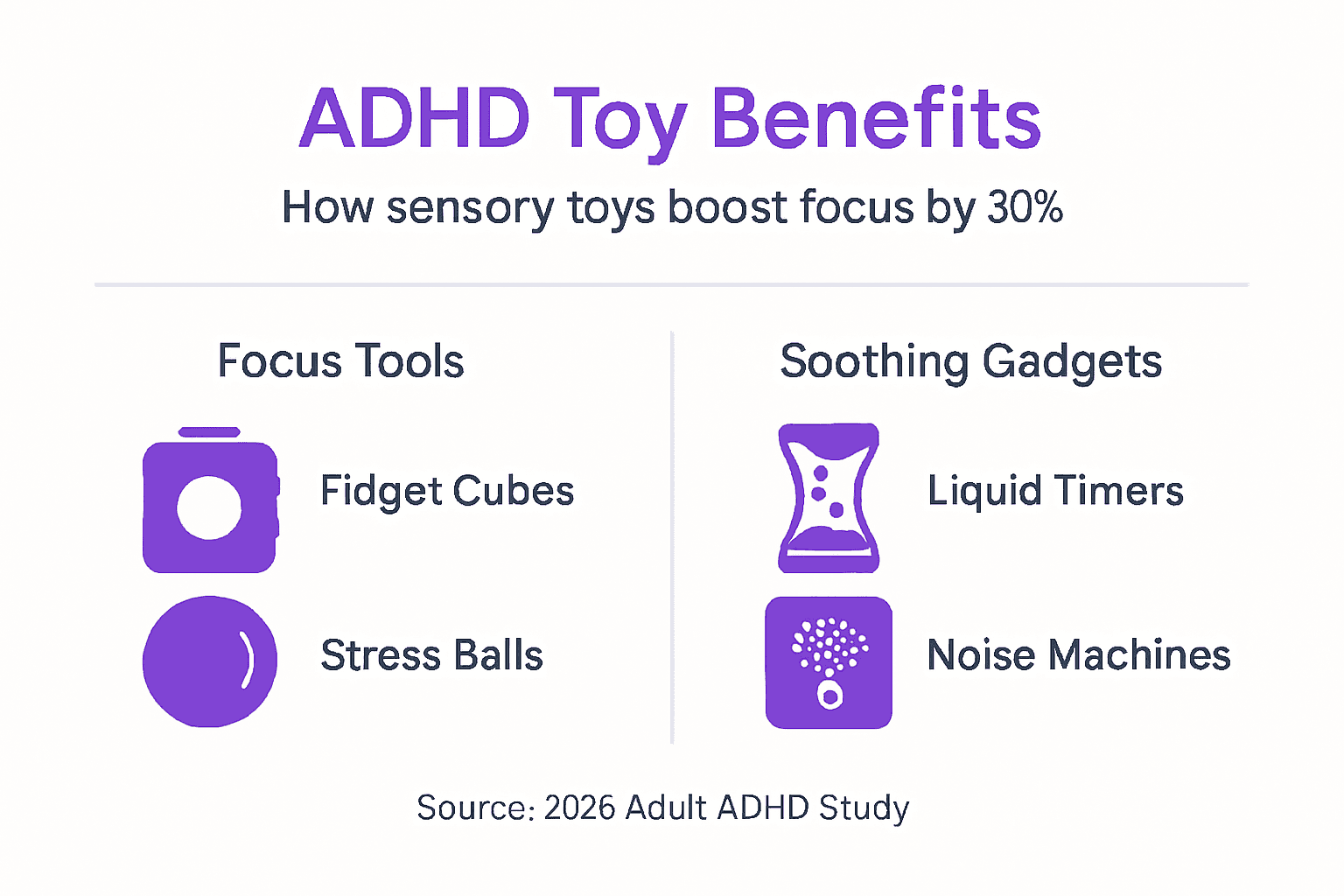
Multi-sensory toys combine tactile, auditory, and visual elements for comprehensive sensory input. Interactive toys for ADHD often integrate several modalities, giving you flexibility to adjust based on current needs. Educational plush toys deliver layered sensory experiences while remaining discreet enough for professional environments. Technology in plush toys adds digital calming tools alongside physical comfort.
| Toy Type | Key Features | Portability | Best Use Scenario |
|---|---|---|---|
| Tactile Fidgets | Buttons, textures, resistance | High | During meetings or focus work |
| Auditory Tools | Calming sounds, rhythmic patterns | Medium | Studying or concentration tasks |
| Visual Aids | Liquid motion, color shifts | Low to Medium | Breaks or transitions |
| Multi-Sensory | Combined inputs, digital integration | High | All-day carry for varied needs |
Choosing based on sensory preference optimizes calming and focus benefits:
- Test different modalities to identify what helps you concentrate
- Consider portability for work, travel, and social settings
- Look for discreet designs that fit professional environments
- Prioritize durability for daily use
Common Misconceptions About Calm-Inducing Toys
Myth: Calm-inducing toys distract adults with ADHD. Fact: Research shows that tactile manipulation with sensory toys reduces restlessness and significantly improves task completion in individuals with ADHD. The controlled sensory input actually enhances focus by providing the stimulation your brain seeks, preventing it from finding more disruptive outlets.
Myth: These toys only help children. Fact: Adults experience the same sensory regulation benefits that children do. Evidence shows adults gain significant anxiety reduction and concentration improvements when using appropriate sensory tools. The stigma around adult toy use ignores substantial clinical support for these interventions across all ages.
Myth: All sensory toys work equally for everyone. Fact: Effectiveness depends entirely on matching toys to your individual sensory profile. A tactile seeker won’t benefit much from purely visual tools, and auditory processors need sound-based options. This is why experimentation and self-awareness matter when selecting calm-inducing toys.
Myth: Toys cure ADHD symptoms by themselves. Fact: Calm-inducing toys are complementary tools supporting broader ADHD management strategies. They work best alongside medication, therapy, organizational systems, and lifestyle modifications. Understanding these myths encourages intentional, informed use rather than dismissal or unrealistic expectations.
Key clarifications:
- Sensory tools reduce specific symptoms but don’t replace comprehensive treatment
- Age-appropriate designs exist for adults seeking professional discretion
- Personal sensory profiles determine which toys provide actual benefit
- Proper integration into routines maximizes effectiveness
Emotional Benefits of Calm-Inducing Toys
Toys reduce overwhelming sensory input, helping to calm anxiety and nervous system activity during stressful moments. When you feel sensory overload building, engaging with a familiar tactile or auditory tool provides immediate grounding. This interrupts the escalation cycle before anxiety becomes unmanageable.
Using toys creates comforting routines that lower stress and mental clutter. Integrating calm-inducing toys into daily routines helps reduce mental clutter by providing tactile anchors that support mindfulness and emotional regulation in ADHD adults. Morning preparation, work transitions, and evening wind-down periods all benefit from consistent sensory tool use.
They promote emotional balance by supporting self-regulation during difficult moments. When frustration or overwhelm hits, having a go-to sensory tool prevents emotional reactions from spiraling. The physical action of manipulating a toy gives your nervous system something concrete to process while emotional intensity decreases.
Regular use with mindfulness boosts overall mental wellbeing and attention. Pairing sensory tools with breathing exercises or brief meditation creates powerful calming rituals. Sensory toys emotional benefits extend beyond immediate stress relief to long-term emotional resilience.
Pro Tip: Combine toy use with breathing exercises to deepen emotional calm. Try holding your fidget toy while doing four counts in, four counts hold, four counts out breathing. The dual focus amplifies both techniques.
Key emotional advantages:
- Immediate anxiety reduction during overwhelming moments
- Creation of predictable calming rituals and routines
- Enhanced emotional self-awareness and regulation skills
- Reduced sensory overload through controlled input
Practical Applications and Integration
Identify your sensory processing profile to select matching toys. Notice whether you naturally seek touch, sound, or visual stimulation when stressed. Do you tap your fingers, hum, or doodle? These habits reveal which sensory channel your brain prefers for regulation.
- Pick calm-inducing toys delivering the sensory input you need: tactile for touch seekers, auditory for sound processors, or visual for those who respond to movement and color.
- Integrate toys consistently into daily environments like work, home, or travel by keeping them accessible in bags, pockets, or desk drawers.
- Create calming routines pairing toys with mindfulness or breathing techniques, such as using your fidget during morning coffee or before bed.
- Start with one toy and evaluate its impact on your focus and calm over two weeks before adding others.
- Adjust your selection based on context—discreet fidgets for meetings, larger sensory tools for home use.
Therapists recommend combining sensory tools with routines to encourage calm habits and reduce overwhelm in ADHD adults. For example, MOMORO’s 5-in-1 multi-sensory companion offers varied sensory inputs in one portable device, combining tactile engagement with digital calming tools. This integration supports focus while keeping essentials organized, reducing the mental load of scattered items.
Using plush for ADHD routines adds comfort to practical sensory support. Establish morning and evening rituals involving your chosen tools to anchor your day. Stress reduction strategies often emphasize consistency over intensity, making small daily practices more effective than occasional intensive efforts.
Pro Tip: Balance toy use to avoid sensory overload and maintain effectiveness. If you notice diminishing returns or increased distraction, take a break or switch to a different sensory modality. Variety prevents habituation and keeps tools effective.
Summary and Next Steps
Calm-inducing toys regulate sensory input to improve focus and emotional regulation in adults with ADHD. Evidence supports their wide-ranging effectiveness when matched to individual sensory needs and integrated thoughtfully into daily routines. These tools complement professional treatment and organizational strategies, offering immediate, accessible support for attention and emotional challenges.
Personalize toy choice based on your sensory processing profile for best results. Experiment with tactile, auditory, and visual options to discover what genuinely helps you concentrate and stay calm. Integrate toys into routines alongside mindfulness practices for sustained benefits throughout 2026 and beyond.
Key takeaways:
- Controlled sensory input through toys reduces restlessness and improves task completion
- Different toy types address tactile, auditory, and visual sensory preferences
- Evidence refutes misconceptions about distraction or age appropriateness
- Emotional benefits include anxiety reduction and better self-regulation
- Practical integration into routines maximizes effectiveness
Experiment with different toys to find your ideal calming aids. Start with one option, evaluate its impact honestly, and adjust based on real-world results. Your sensory needs may shift with context, so building a small collection of complementary tools provides flexibility.
Explore Calm-Inducing Toys and Supportive Tools at MOMORO
MOMORO offers curated calm-inducing solutions designed specifically for the sensory needs of adults with ADHD. Our 5-in-1 interactive companion combines tactile comfort with digital calming tools, providing varied sensory inputs in one discreet, portable format.

Explore practical guides on using plush for ADHD routines to build consistent calming habits. Discover comfort collectibles for ADHD adults that provide discreet sensory support throughout your day without drawing unwanted attention. Access trusted ADHD support resources and strategies tailored for 2026 challenges, including organizational systems, focus techniques, and emotional regulation practices.
MOMORO’s NFC-enabled companion unlocks monthly calming gifts including focusing audio and mini games designed for ADHD minds. The detachable wallet, phone holder, and keychain functions reduce mental clutter by keeping essentials together, supporting both sensory regulation and practical organization.
FAQ
What are calm-inducing toys?
Calm-inducing toys are sensory tools that provide tactile, auditory, or visual input to help regulate focus and emotions, especially for people with ADHD. They aim to reduce stress and improve attentional control through controlled sensory stimulation, offering your nervous system predictable input that promotes calm.
How do calm-inducing toys help adults with ADHD?
They help manage restlessness by providing sensory input that calms the nervous system and channels excess energy. This improves concentration during tasks, reduces anxiety in stressful situations, and supports emotional regulation throughout the day. The controlled stimulation prevents your brain from seeking more disruptive outlets.
Which types of calm-inducing toys are best for ADHD?
Tactile toys like fidget cubes or stress balls suit those needing touch stimulation and physical manipulation. Auditory toys help individuals responsive to calming sounds or rhythmic patterns. Visual toys engage sight and can be soothing for visual sensory seekers. Multi-sensory toys combine inputs for broader benefit across different contexts and needs.
Can calm-inducing toys replace medication or therapy?
Calm-inducing toys complement but do not replace medication or professional therapy for ADHD management. They are tools to support self-regulation and focus as part of a holistic treatment plan that may include medication, behavioral therapy, organizational strategies, and lifestyle modifications. Use them alongside, not instead of, evidence-based treatments.